

Marriage restoration is rarely instant, and it is never random. If you are standing in the gap for your marriage, you have likely discovered this firsthand. What you hoped would be quickly healed has instead unfolded into a long, painful process marked by silence, loss, and deep uncertainty. You may have prayed desperately for change, only to find yourself still waiting, still hoping, and still standing.
Scripture offers an important truth for moments like these: God restores through process, not shortcuts. Throughout the Bible, restoration follows a divine pattern. What feels like delay is often development. What feels like devastation is often preparation. And what feels like death is frequently the doorway to resurrection.
From Gethsemane to Golgotha, through the Tomb, and ultimately into Resurrection, God reveals how He redeems what seems beyond repair. This is not only Christ’s journey—it is often the journey of marriages God restores.
Gethsemane — The Crushing 
“Every marriage that God restores passes through Gethsemane.”
Matthew 26:36–39; Luke 22:44; Isaiah 53:5; John 15:2
Gethsemane was not an interruption in Jesus’ life—it was an appointment. It was the place where sorrow pressed in, where obedience became costly, and where surrender was fully required. Scripture tells us Jesus was deeply distressed and troubled, and that under the weight of what lay ahead, His sweat fell like drops of blood. This was not weakness; it was obedience under pressure.
If you are standing in the gap for your marriage, Gethsemane may feel familiar. It is the season where emotional pressure feels overwhelming, God’s silence feels confusing, rejection cuts deeply, and grief settles into your chest and refuses to lift. You may wonder why obedience hurts this much, why standing feels harder than walking away, and why trusting God feels heavier than taking control.
But Gethsemane is not where God destroys—it is where He prepares. The word Gethsemane means oil press. Olives are not gently opened; they are crushed. Only through pressure does the oil flow. In the same way, God often uses seasons of pressure to remove what cannot follow us into the next season.
Jesus said, “Every branch that bears fruit He prunes, that it may bear more fruit.” (John 15:2)
In this season, God may be pressing out pride that resists surrender, fear that masquerades as wisdom, control disguised as responsibility, self-reliance that limits dependence on Him, and old wounds and unhealthy patterns. This is not punishment. It is preparation.
Scripture declares, “He was wounded for our transgressions… and by His stripes we are healed.” (Isaiah 53:5)
The crushing produces oil, and oil in Scripture represents anointing, healing, and empowerment. What hurts now is forming something holy.
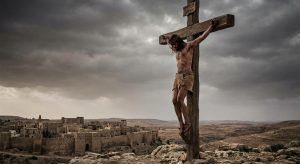 Golgotha — The Breaking
“Every restoration story has a moment where something must break.”
Luke 23:33–34; Colossians 2:13–15; Romans 6:6; Psalm 34:18
Golgotha is the place where hope appears lost. It is where marriages often feel beyond repair—communication collapses, the covenant feels fractured, your spouse feels unreachable, and your heart feels nailed to grief and disappointment. From the outside, Golgotha looked like finality, death, and defeat.
But Scripture tells a deeper story. “Having disarmed the powers and authorities, He made a public spectacle of them, triumphing over them by the cross.” (Colossians 2:15)
At Golgotha, it was not Jesus who was truly breaking. It was chains of sin, generational curses, lies spoken over identity and covenant, and strongholds that quietly destroy relationships. Sometimes God allows something in us to break so that what is destroying the marriage can finally die.
At Golgotha, pride breaks, control breaks, fear breaks, trauma breaks, and destructive cycles break. Scripture reminds us, “Our old self was crucified with Him so that the body ruled by sin might be done away with.” (Romans 6:6)
Golgotha is painful, but it is holy ground—because what breaks here makes room for resurrection.
The Tomb — The Stillness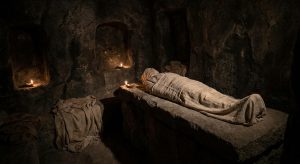
“Waiting doesn’t mean God is done—it means God is working in silence.”
Matthew 27:59–60; Psalm 27:14; Lamentations 3:31–33; Isaiah 40:31
The tomb is the season few talk about and many struggle to survive. It is the waiting, the stillness, and the silence. There are no updates, no reassurance, and no visible progress. This is where faith is tested the deepest.
If this is where you are, you may feel forgotten or even foolish for still hoping. You may wonder if your prayers are falling into empty space. But Scripture speaks clearly into this place:
“The Lord will not cast off forever. Though He causes grief, He will have compassion.” (Lamentations 3:31–32)
The tomb was not defeat. It was divine preparation. While the world saw stillness, God was working. While others assumed it was over, heaven was aligning resurrection.
In the waiting, hearts soften, strongholds weaken, God realigns timing and purpose, and foundations are rebuilt quietly and carefully. Scripture encourages us, “Wait for the Lord; be strong and take heart and wait for the Lord.” (Psalm 27:14)
Silence does not mean absence. God often does His greatest work where no one is watching.
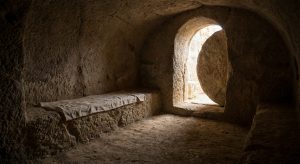 The Third Day — The Resurrection
“If God brought resurrection once, He can do it again in your marriage.”
Matthew 28:5–6; Romans 8:11; Ezekiel 37:5–6; Mark 10:9
The resurrection was not merely an event—it was a declaration.
“He is not here; He has risen.” (Matthew 28:6)
What looked dead was never dead to God. Your marriage may look buried. Your spouse may feel distant. Your heart may feel exhausted from believing. But resurrection is not dependent on your strength—it is dependent on God’s power.
Scripture declares, “The same Spirit who raised Jesus from the dead lives in you.” (Romans 8:11)
God can resurrect love, trust, communication, unity, and covenant. “What God has joined together, let no one separate.” (Mark 10:9)
What the enemy tried to bury, God can bring back to life.
Final Encouragement for Those Standing in the Gap
If you are in Gethsemane, do not quit. If you are at Golgotha, stay surrendered.
If you are in the Tomb, wait faithfully. Because resurrection belongs to God.
“At the appointed time, I, the Lord, will make it happen.” (Isaiah 60:22)
Your story is not over. Your marriage is not beyond redemption.
God is still working—even now.