
5 minute read
Some seasons of covenant crisis expose how little control a person truly has. Helping Children Trust God When Adults Have Failed speaks to that tender place where obedience must be practiced before answers can be measured.
Primary Scripture readings: Psalm 27:10, Lamentations 3:22-23, Hebrews 13:5. Read these passages in NASB 1995 and notice the verbs, warnings, promises, and commands before turning them into personal application.
The goal is not to make pain sound simple. The goal is to let the Word of God govern the pain, so that prayer, counsel, speech, restraint, and hope are shaped by Christ rather than by fear.
Name the ache before God
Scripture does not flatter the wounded heart, but it does not crush it either. It names sin honestly, calls for repentance clearly, and gives courage to practice pointing them to the Father who is faithful without making an idol of visible progress.
Psalm 27:10 gives the first anchor for this article. Do not rush past it. Let the passage correct both hopelessness and presumption. Biblical hope has room for tears, but it does not allow the wound to become lord over the soul.
Receive truth without rushing
Children should not be asked to carry adult grief, adult secrets, or adult blame. They need tenderness, age-appropriate truth, prayer, routines, and examples of repentance that make the gospel visible in ordinary family life.
One practical test is to ask what this response will cultivate over the next thirty days. Will it cultivate prayer or suspicion? Humility or superiority? Patience or pressure? Truth or image-management? The fruit often reveals the root before the mouth does.
Pastoral cautions
Do not use Scripture as a tool for winning arguments. Let it search the reader first. A verse used to control another person may sound religious while failing to bear the gentleness, truth, and reverence that belong to Christ.
Where repentance is needed, ask for grace to repent without theatrical display. Where forgiveness is needed, ask for grace to forgive without denying reality. Where patience is needed, ask for grace to wait without becoming passive. Where courage is needed, ask for grace to speak without cruelty.
Scripture-shaped application
Ask how the passage would sound to a wounded spouse, a repentant spouse, a child in the home, and a mature counselor. That exercise can expose blind spots and help the reader apply truth with both conviction and tenderness.
Christian maturity is often seen in the gap between what the heart feels and what the hands choose. The Lord is not dismissive of emotion, but He does call His people to bring emotion into obedience. That is why prayer, counsel, confession, and Scripture intake belong together.
Practice one act of obedience
1. Write the primary Scripture reference at the top of a journal page and list three truths about God before listing requests. Do it quietly before the Father rather than using it to prove maturity to another person. Hidden obedience is still seen by God.
2. Choose one conversation where restraint would honor Christ, and prepare words that are truthful without being sharp. This is not a method for forcing an outcome. It is a small act of discipleship that keeps the heart near the Lord while the larger story remains unfinished.
3. Ask one mature, biblically grounded believer to pray with you and to challenge any pattern of fear, pride, or retaliation. Keep the step small enough to practice today and serious enough to require faith. Obedience usually becomes durable through repeated, ordinary surrender.
When the article meets real life
The reader may need to apologize before asking for change from anyone else. That does not erase another person's sin; it simply refuses to let another person's sin become an excuse for disobedience.
A biblically grounded article should leave the reader more submitted to Christ, not merely more informed about pointing them to the Father who is faithful. The final measure is not whether every question has been answered, but whether the next step is clearer, humbler, and more faithful.
A ministry note
Some steps should be taken slowly and with counsel. If decisions involve children, finances, safety, church discipline, legal matters, or patterns of severe deception, invite qualified help. Wise counsel does not replace prayer; it often becomes one of the ways God protects a person from isolation and impulsive choices.
This is also why the article should be read devotionally and practically. Do not only underline the sentences that comfort. Underline the ones that correct. Do not only notice the warnings that apply to another person. Ask which warnings apply to your own mouth, motives, habits, and hidden thoughts. The Lord’s kindness is often precise.
For further study
For a broader Christian resource context, consult Ligonier Ministries and its teaching resources on covenant, Scripture, and discipleship at https://www.ligonier.org/learn. Use outside resources carefully and gratefully, but keep the article’s Scripture readings as the controlling authority. A helpful resource should send the reader back to the Bible with greater humility, not away from it with a collection of techniques.
Recommended next reading inside this Library: choose one article from Family and Children and one article from Prayer and Intercession or Wisdom and Discernment. Pairing topic-specific counsel with prayer and wisdom keeps the heart from becoming narrow, reactive, or isolated.
A prayer for today
Father, search what is hidden, steady what is fearful, and teach me to obey You in the part of the story I can touch. Guard me from bitterness, presumption, and despair. Make my hope truthful, my love holy, and my next step faithful to Christ. Amen.
Related resources

Jacob, Leah, and Rachel: When Love, Family, and Favoritism Become Complicated
This is for the parent trying to keep adult pain from becoming a child's burden while still walking honestly before the Lord. Jacob, Leah, and Rachel: When Love,…
Read Article
Teaching Children Faith When the Family Is Hurting
Faithfulness is rarely loud. It often looks like one guarded word, one prayer prayed without applause, one act of obedience when the heart would rather prote...
Read Article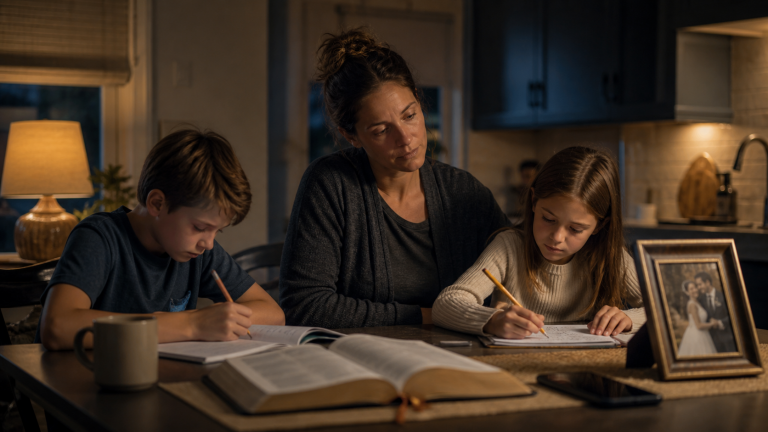
Parenting While Brokenhearted
This is for the person trying to obey Jesus in a marriage crisis without letting pain, fear, or other voices become lord over the heart. Parenting While Brokenhearted…
Read Article